
What Does a Bookkeeper Do? A Complete Guide for Small Business Owners
If you're asking "What does a bookkeeper do?", you're not alone. Many business owners know they need to keep accurate financial records but aren't sure whether they need a bookkeeper, an accountant, or both.
A bookkeeper helps keep your business finances organised, accurate and up to date. From recording transactions to reconciling bank accounts and preparing records for your accountant, bookkeeping plays a vital role in the success of any small business.
In this guide, we'll explain exactly what a bookkeeper does, how bookkeeping benefits small businesses, and when it may be time to outsource your bookkeeping.
What Is a Bookkeeper?
A bookkeeper is responsible for recording and maintaining a business's financial transactions.
Their role is to ensure that income, expenses, invoices, receipts and bank transactions are accurately recorded and organised. Good bookkeeping provides a clear picture of your business finances and helps you stay compliant with financial reporting requirements.
Without accurate bookkeeping, business owners can struggle to understand cash flow, profitability and overall business performance.
What Does a Bookkeeper Do for a Small Business?
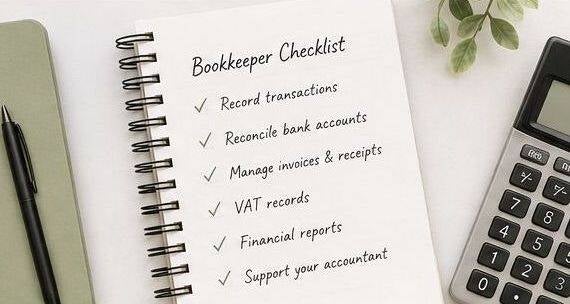
1. Records Financial Transactions
Every business transaction needs to be accurately recorded.
This includes:
Sales income
Business expenses
Supplier payments
Customer payments
Bank transactions
Cash transactions
Accurate financial records form the foundation of effective bookkeeping.
2. Reconciles Bank Accounts
Bank reconciliation is one of the most important bookkeeping tasks.
A bookkeeper compares your accounting records against your bank statements to ensure everything matches correctly. This helps identify:
Missing transactions
Duplicate entries
Incorrect postings
Potential errors
Regular bank reconciliations help keep your financial records accurate and reliable.
3. Maintains Organised Financial Records
A professional bookkeeper ensures invoices, receipts and supporting documents are stored correctly and easily accessible.
This helps save time and reduces stress when information is needed for tax returns, VAT submissions or accountant queries.
4. Supports VAT Compliance
For VAT-registered businesses, bookkeeping is essential.
A bookkeeper helps maintain accurate records that support VAT returns and ensure transactions are correctly recorded throughout the year.
5. Keeps Accounting Software Up to Date
Many businesses use cloud accounting software such as Xero, QuickBooks or FreeAgent.
A bookkeeper ensures transactions are correctly categorised, reconciled and maintained within the software, helping business owners get the most from their systems.
6. Prepares Information for Your Accountant
While accountants and bookkeepers have different roles, they work closely together.
By keeping records organised and accurate, a bookkeeper helps your accountant prepare year-end accounts and tax returns more efficiently.
Why Is Bookkeeping Important?
Effective bookkeeping helps business owners:
Understand cash flow
Monitor business performance
Stay organised
Prepare for tax deadlines
Avoid costly mistakes
Make informed business decisions
Many small business owners underestimate the value of accurate bookkeeping until they fall behind and face a backlog of paperwork.
When Should You Hire a Bookkeeper?
You may benefit from hiring a bookkeeper if:
Your bookkeeping is regularly falling behind
You spend evenings or weekends updating records
You dread dealing with receipts and invoices
You're unsure whether your figures are accurate
You want more time to focus on growing your business
Outsourcing bookkeeping allows many business owners to reclaim valuable time while ensuring their records remain accurate and organised.
Frequently Asked Questions
Is a bookkeeper worth it for a small business?
For many small businesses, a bookkeeper saves significant time and helps reduce errors, allowing owners to focus on running their business.
Can a bookkeeper prepare tax returns?
Bookkeepers and accountants have different roles. A bookkeeper maintains financial records, while accountants typically prepare tax returns and provide tax advice.
How often should bookkeeping be done?
Ideally, bookkeeping should be updated regularly throughout the month to keep records accurate and prevent backlogs.
Bookkeeping Support for Small Businesses in Norfolk
At Fuller Figures Bookkeeping, I provide professional bookkeeping support for small businesses across Norfolk and beyond. As an AAT Licensed Bookkeeper, I help business owners stay organised, maintain accurate financial records and spend less time worrying about paperwork.
Whether you need ongoing bookkeeping support or help catching up on overdue records, I'm here to help.
Ready to Take Bookkeeping Off Your To-Do List?
Get in touch with Fuller Figures Bookkeeping today to discuss how professional bookkeeping support can help your business stay organised and grow with confidence.