
How Often Should You Do Your Bookkeeping?
Bookkeeping is one of those jobs that can easily get pushed to the bottom of your to-do list.
When you're busy running your business, serving customers and trying to keep everything else organised, updating your financial records might not feel urgent. But leaving your bookkeeping until the end of the year can make things much more difficult than they need to be.
So, how often should you do your bookkeeping?
For most small businesses and sole traders, monthly bookkeeping is a good starting point. However, the right frequency depends on the size of your business, how many transactions you have and how closely you need to monitor your finances.
Let's look at the different options.
Weekly bookkeeping
For businesses with a high volume of transactions, weekly bookkeeping can be beneficial.
Keeping your records updated each week means you are less likely to fall behind and can quickly spot anything that doesn't look right.
Weekly bookkeeping can be particularly useful if you:
- Have lots of sales and purchases
- Have several business bank transactions every week
- Regularly purchase stock or supplies
- Need to keep a close eye on cash flow
- Want your financial information to be as up to date as possible
It doesn't necessarily mean spending hours on your accounts every week. For some businesses, a short, regular bookkeeping routine can be enough to keep everything under control.

Monthly bookkeeping
For many small businesses, monthly bookkeeping provides a good balance between keeping records up to date and keeping bookkeeping manageable.
With monthly bookkeeping, your income and expenses can be recorded and your business bank account reconciled regularly.
It also means you aren't relying on memory months later to work out what a particular transaction was for.
Regular monthly bookkeeping can help you:
- Keep your financial records organised
- Reconcile your business bank account
- Keep track of income and expenses
- Identify missing or unusual transactions
- Monitor how your business is performing
- Stay on top of your bookkeeping throughout the year
- Reduce the stress of catching up on months of records
Perhaps most importantly, monthly bookkeeping gives you a much clearer picture of how your business is doing.

Quarterly bookkeeping
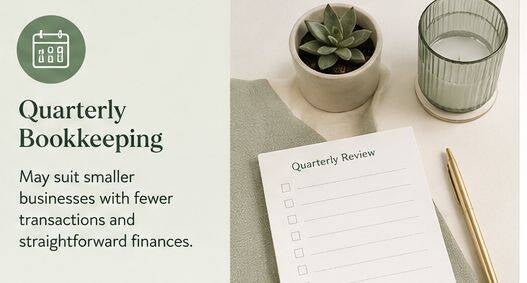
Quarterly bookkeeping may be suitable for some smaller businesses with relatively few transactions.
If your business is very small and your transactions are straightforward, updating your records every three months may be manageable.
However, quarterly bookkeeping means you have less up-to-date information between bookkeeping periods.
If something changes in your business, you may not notice it straight away.
For businesses that are growing, monthly bookkeeping is often more useful because it gives you more regular information about your finances.
What happens if you leave your bookkeeping until the end of the year?
This is where bookkeeping can become stressful.
Leaving everything until the end of the year can mean trying to remember what dozens, hundreds or even thousands of transactions were for.
You may also have:
- Missing receipts
- Uncategorised transactions
- Unreconciled bank accounts
- Forgotten expenses
- Duplicate entries
- Incomplete records
- A large backlog of bookkeeping to work through
A year's worth of bookkeeping can take considerably longer to sort out than maintaining your records regularly.
And while your bookkeeping is behind, you don't have an accurate picture of what's happening financially within your business.

Regular bookkeeping can help you understand your business
Bookkeeping isn't just about keeping HMRC happy.
Your financial records can tell you a lot about how your business is performing.
Regular bookkeeping can help you see:
What's coming in?
You can monitor your sales and income and see whether revenue is increasing or decreasing.
What's going out?
Keeping track of your expenses can help you understand where your money is being spent.
Are you making a profit?
Regular financial information can give you a clearer picture of your business's performance.
Do you have enough money available?
Profit and cash flow aren't the same thing, so keeping your records up to date can help you keep a closer eye on the money moving through your business.
How often should you reconcile your business bank account?
Ideally, your business bank account should be reconciled regularly rather than left until the end of the year.
For many businesses, monthly reconciliation works well alongside monthly bookkeeping.
Bank reconciliation involves comparing the transactions recorded in your bookkeeping system with your actual bank transactions to make sure they match.
This can help identify errors, missing transactions and duplicated entries.
The more regularly you reconcile, the easier it generally is to investigate anything that doesn't look right.
How often should a sole trader do their bookkeeping?
There isn't one answer that applies to every sole trader.
A sole trader with only a handful of transactions each month may have very different bookkeeping needs from someone running a busy service-based business.
However, even a small sole trader business can benefit from keeping its records updated regularly.
Monthly bookkeeping is often a practical option for sole traders who want to stay organised without having to think about their accounts every week.
If you're unsure how often you should be doing your bookkeeping, consider:
- How many transactions you have each month
- How complicated your finances are
- Whether you're VAT registered
- How often you need to review your business performance
- How comfortable you are managing your own bookkeeping
- Whether you regularly fall behind
What about growing small businesses?
As your business grows, your bookkeeping requirements can change.
You may start with only a few transactions each month, but as your sales increase, you may have more customers, suppliers, expenses and bank transactions to keep track of.
This is often when bookkeeping becomes more difficult to manage alongside everything else you're doing.
Regular bookkeeping can become less of a chore and more of a useful business tool.
Instead of waiting until the end of the year to find out how your business has performed, you can have a much clearer view throughout the year.
Could monthly bookkeeping save you time?
Doing your bookkeeping yourself can seem like the cheapest option, particularly when you're starting out.
But it's worth considering how much of your own time bookkeeping takes.
If you spend several hours each month sorting receipts, checking transactions, reconciling accounts and trying to work out what everything means, that is time you're not spending on other areas of your business.
Outsourcing your bookkeeping can give you back some of that time while helping you keep your financial records organised.
How often should you check your business finances?
Bookkeeping and reviewing your finances aren't quite the same thing.
Your bookkeeping might be completed monthly, but you may want to look at your financial position more frequently.
For example, you might regularly check:
- Your business bank balance
- Outstanding payments
- Upcoming bills
- Recent sales
- Major expenses
- Your overall cash position
Keeping an eye on these things can help you avoid unpleasant surprises.
The bottom line
There isn't a magic number that determines how often every business should do its bookkeeping.
For some businesses, weekly bookkeeping makes sense. For others, monthly bookkeeping is more practical. Very small businesses with straightforward finances may be able to manage on a quarterly basis.
The important thing is not allowing your bookkeeping to become a backlog.
For many sole traders and small businesses, monthly bookkeeping offers a practical way to keep records organised, stay informed about business performance and avoid a stressful year-end catch-up.
If bookkeeping keeps getting pushed to the bottom of your list, it may be time to consider getting some support.

Looking for bookkeeping support?
At Fuller Figures, I provide friendly, straightforward bookkeeping support for sole traders, freelancers, start-ups, side hustles and small businesses across Norfolk, Suffolk, Cambridgeshire and beyond.
Whether you need regular monthly bookkeeping or help getting your records back up to date, I can help you keep your figures organised without the jargon.
Bookkeeping with Heart 💚
Frequently Asked Questions
Is monthly bookkeeping enough?
For many sole traders and small businesses, monthly bookkeeping is a practical option. However, businesses with a high number of transactions or more complex finances may benefit from more frequent bookkeeping.
Can I do my bookkeeping once a year?
While you may be able to organise your records retrospectively, leaving bookkeeping until the end of the year can make it much harder to keep accurate records and understand how your business is performing.
Is weekly bookkeeping better than monthly bookkeeping?
Not necessarily. The right frequency depends on your business. Weekly bookkeeping may suit businesses with lots of transactions, while monthly bookkeeping can work well for many small businesses.
How often should I reconcile my business bank account?
Your business bank account should be reconciled regularly. For many businesses, doing this monthly alongside their bookkeeping is a practical approach.
What happens if my bookkeeping is behind?
If your bookkeeping has fallen behind, don't panic. A bookkeeping catch-up can help bring your records up to date so you can return to a regular bookkeeping routine.
Do I need a bookkeeper to do my bookkeeping?
No. Many business owners manage their own bookkeeping. However, if bookkeeping is taking too much time, you're regularly falling behind or you're unsure whether your records are accurate, professional bookkeeping support could make things easier.